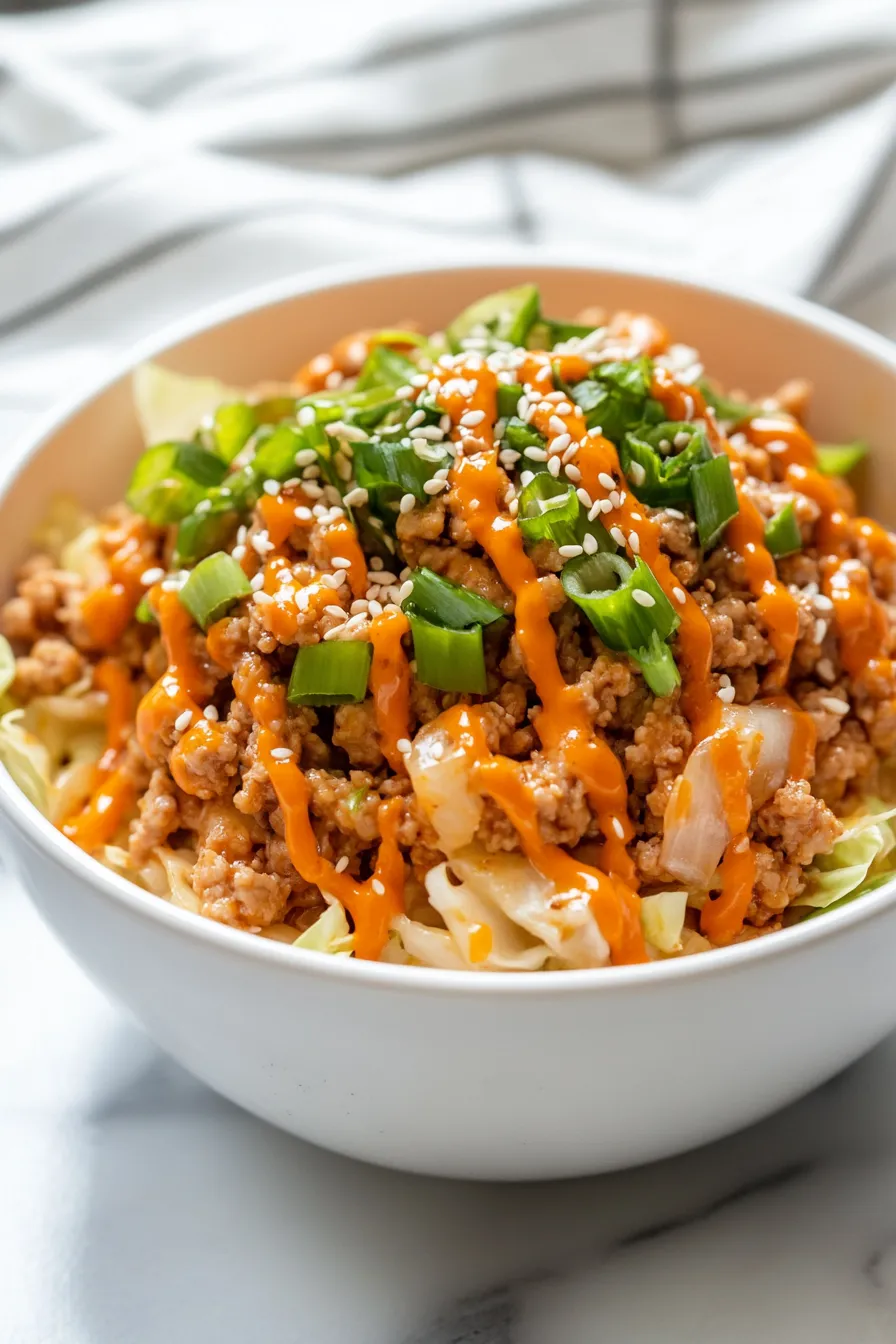

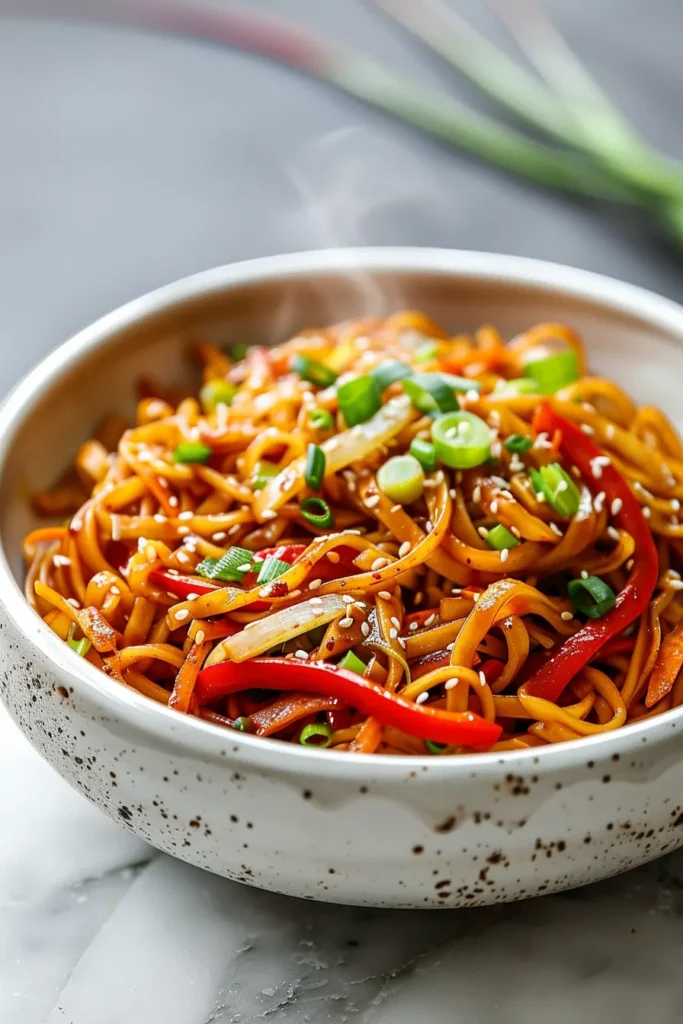
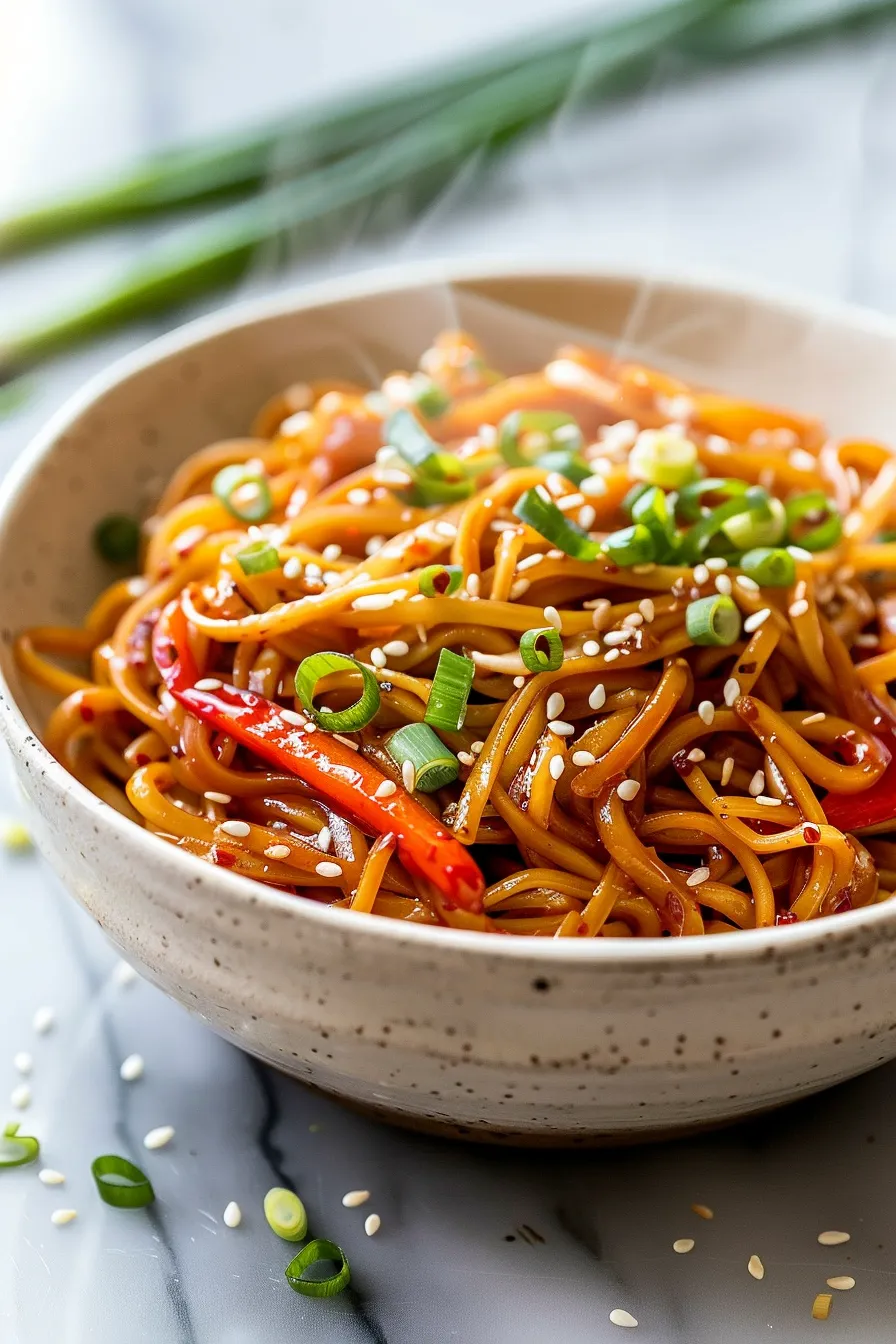
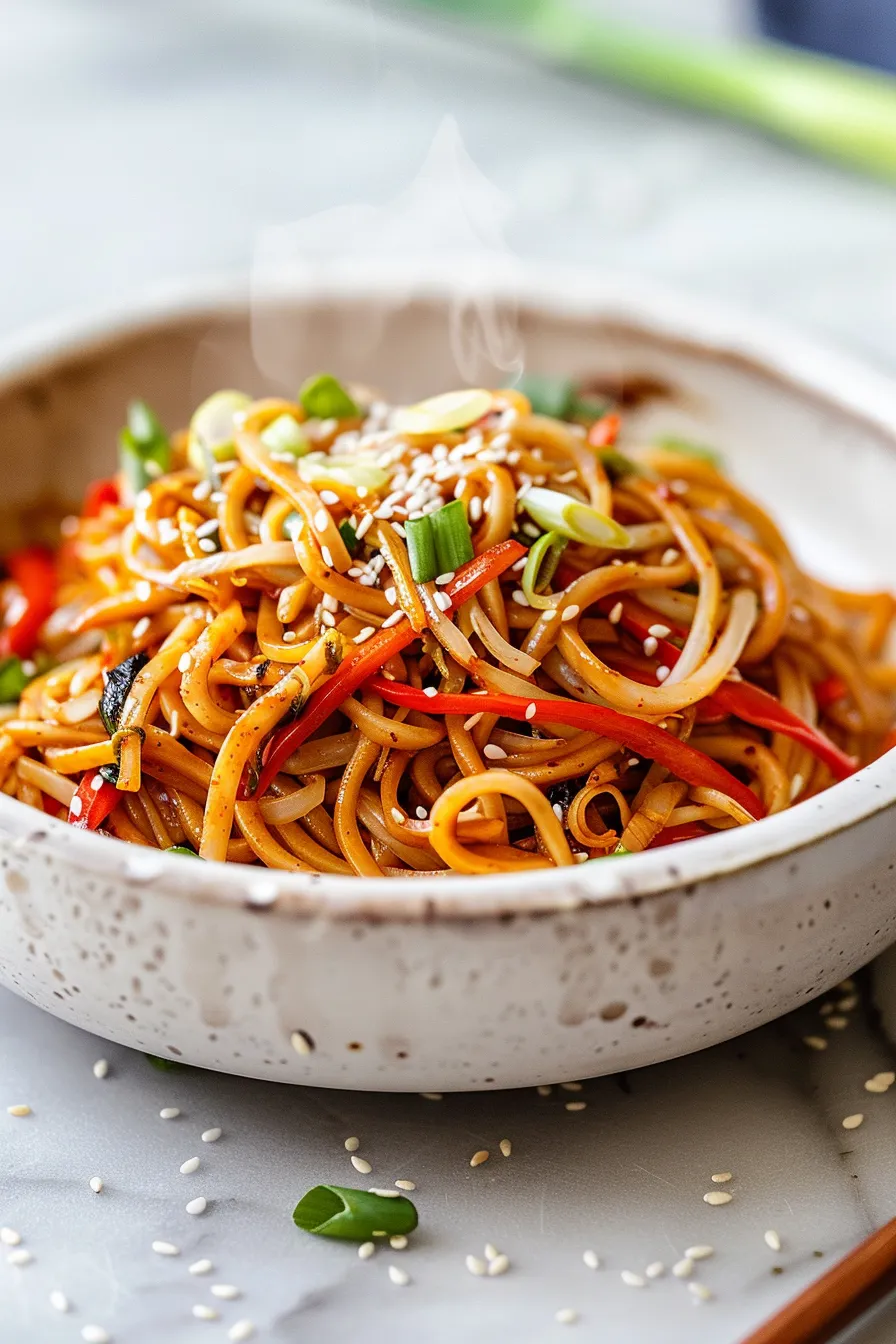
If you are looking for a flavor bomb that comes together faster than you can order takeout, these Sweet and Spicy Korean Gochujang Noodles are the answer. This dish is the definition of “lazy cooking” with gourmet results—sweet, savory, spicy, and sticky all at once. The secret lies in the Gochujang—a Korean fermented chili paste that adds an incredible depth of flavor you just can’t get from hot sauce alone. Paired with chewy rice noodles and crunchy colorful vegetables, this stir-fry is a textural masterpiece. Whether you need a quick work-from-home lunch or a comforting dinner after a long day, this recipe proves that fast food can be fresh, vibrant, and utterly delicious.
Why You’ll Love This Recipe
- Speedy Satisfaction: From prep to plate in just 20 minutes. It is the ultimate “quick fix” for busy schedules.
- Flavor Complexity: It hits every taste bud—spicy heat from the paste, sweetness from brown sugar, tangy lime, and savory soy.
- Pantry Friendly: Uses simple vegetables and shelf-stable sauces you likely already have or can easily find.
- Textural Delight: The sticky sauce clings perfectly to the chewy rice noodles, while the peppers and cabbage add a satisfying crunch.
Equipment
- Large Pot: For boiling the rice noodles.
- Colander: Essential for draining and rinsing the noodles to stop them from overcooking.
- Wok or Large Skillet: You need a wide pan to toss the noodles and sauce evenly without spilling.
- Small Bowl & Whisk: To mix the Gochujang sauce until smooth before adding it to the pan.
- Tongs: The best tool for tossing long noodles with the veggies and sauce.
Ingredients
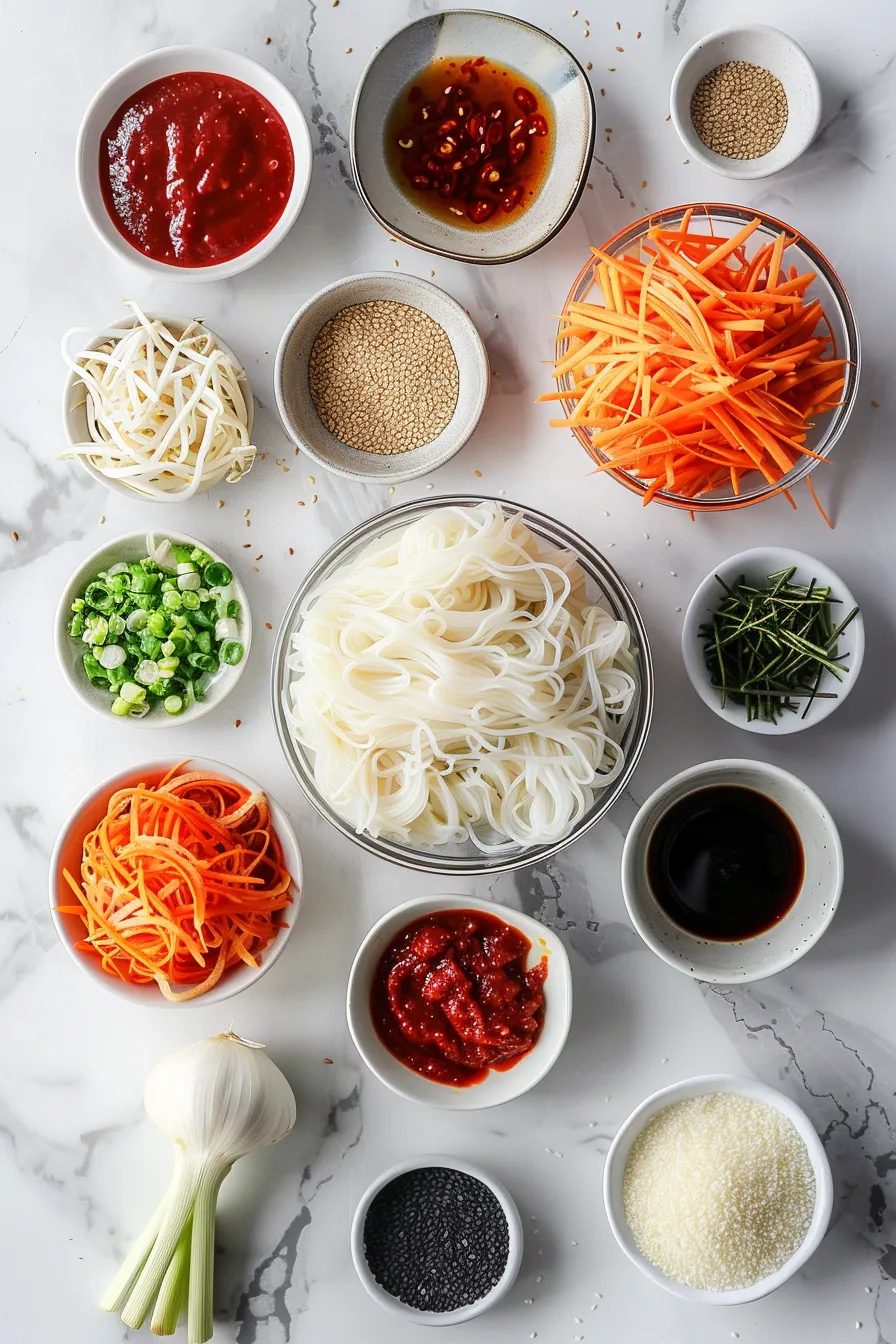
- Rice Noodles: 8 ounces (250g); These offer a wonderful chewy, sticky texture that grabs the sauce. Pad Thai style or vermicelli work well.
- Gochujang Paste: 3 tablespoons; The star ingredient! This fermented chili paste provides heat and umami.
- Hoisin Sauce: 3 tablespoons; Adds thickness and a sweet, barbecue-like depth.
- Dark Soy Sauce: 2 tablespoons; Provides saltiness and rich color.
- Lime Juice: 3 tablespoons; Essential acidity to brighten up the heavy, spicy flavors.
- Sesame Oil: 2 tablespoons; Adds a nutty aroma that is signature to Korean cuisine.
- Brown Sugar: 1 teaspoon; Balances the spice with a hint of caramel sweetness.
- Vegetable Oil: 1 tablespoon; For sautéing the aromatics and veggies.
- Aromatics: 1 tablespoon Minced Garlic; Fresh is best for that sharp kick.
- Vegetables: 1/2 cup Mixed Bell Peppers (sliced), 1 cup Shredded Cabbage, 1/2 cup Shredded Carrots; The “crunch” brigade.
- Garnishes: Green onions and toasted sesame seeds.
Instructions
- Cook the Noodles: Boil the rice noodles according to the package directions. Drain them immediately and set them aside. (See “Pro Tips” for preventing sticking).
- Make the Sauce: In a small bowl, whisk together the Gochujang paste, hoisin sauce, dark soy sauce, lime juice, sesame oil, minced garlic, and brown sugar until smooth and combined.
- Sauté Veggies: Heat the vegetable oil in a large skillet or wok over high heat. Once the oil is shimmering hot, add the sliced bell peppers, shredded cabbage, and carrots. Sauté for just one minute—you want them to stay crisp, not get soggy.
- Combine and Toss: Add the cooked drained noodles and the sauce mixture to the skillet. Using two large spoons or tongs, toss everything vigorously until the noodles are uniformly coated in the sticky red sauce and the veggies are distributed.
- Serve: Remove from heat immediately. Garnish generously with chopped green onions and toasted sesame seeds. Serve hot.
You Must Know
- Gochujang Heat Levels: Gochujang tubs are often labeled with a heat meter ranging from “Mild” to “Extremely Hot.” I recommend starting with “Medium Hot” for a balanced kick, but check the package before buying to suit your tolerance!
- Don’t Overcook: Rice noodles can turn from chewy to mushy in seconds. It is often better to slightly undercook them in the boiling water, as they will finish cooking in the hot sauce in the skillet.
Storage Tips
- Fridge: Store leftovers in an airtight container for up to 3 days. Rice noodles tend to harden in the fridge.
- Reheating: Sprinkle a teaspoon of water over the noodles before microwaving to help steam them back to life. Alternatively, toss them quickly in a hot pan.
- Freezing: This is not recommended. Rice noodles do not hold up well to freezing and thawing; they will break apart and become mealy.
Ingredient Substitutions
- Noodles: While rice noodles are traditional for that sticky texture, this sauce works wonderfully with linguine, spaghetti, udon, or even ramen noodles.
- Vegetables: Clear out your fridge! Broccoli florets, baby corn, mushrooms, snow peas, or bok choy are excellent additions.
- Protein: To make this a heartier meal, add cooked shrimp, sliced chicken, beef strips, or cubed tofu when you sauté the vegetables.
Serving Suggestions
- The Fried Egg: Top each bowl with a crispy sunny-side-up egg. The runny yolk mixes with the spicy sauce for a creamy finish.
- Dumplings: Serve alongside some steamed or pan-fried mandu (Korean dumplings) for a full feast.
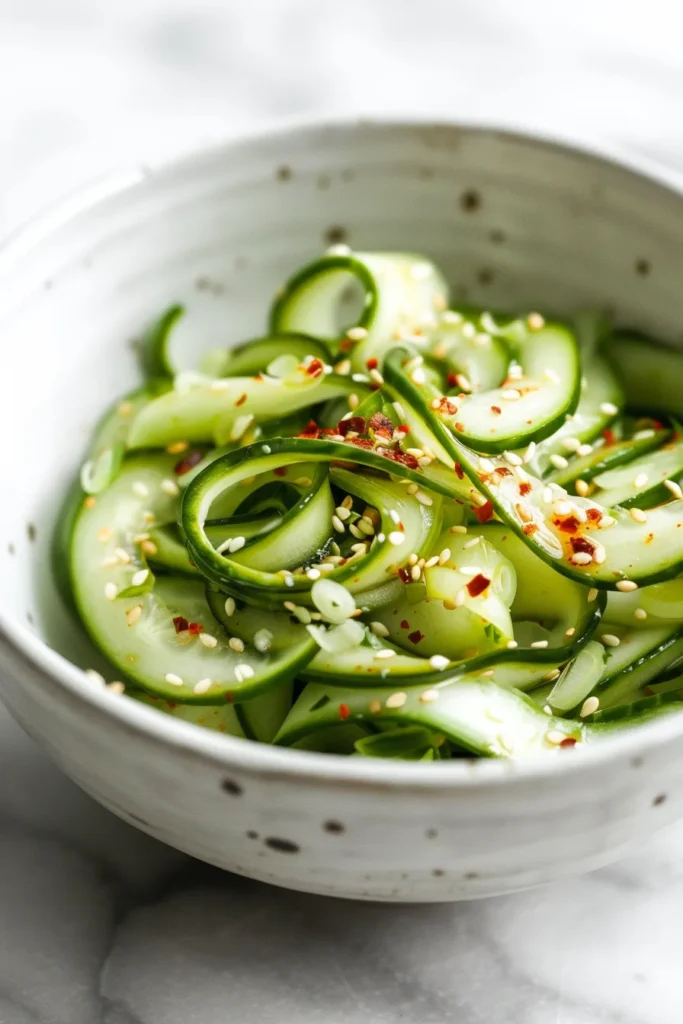
- Fresh Cucumber: Serve with a side of smashed cucumber salad to cool down the palate if the spice is too high.
Cultural and Historical Context
Gochujang (red chili paste) is a fundamental ingredient in Korean cooking, dating back hundreds of years. Made from chili powder, glutinous rice, fermented soybean powder, and salt, it is savory, sweet, and spicy. While this specific noodle stir-fry is a modern fusion adaptation designed for quick home cooking, it honors the Korean love for bold, fermented flavors and vibrant colors.
Seasonal Adaptations
- Summer: Serve these noodles warm or even at room temperature with extra lime juice and fresh cucumber slices for a lighter feel.
- Winter: Ramp up the Gochujang and add sautéed spinach or kale for a warming, immune-boosting spicy bowl.
Perfect Occasions
- Meatless Monday: It is naturally vegetarian (check your hoisin ingredients) and satisfying enough that you won’t miss the meat.
- Late Night Cravings: Faster and healthier than waiting for a delivery driver when you need a midnight snack.
- Solo Dining: The recipe is easily halved for a single serving or made as-is for guaranteed lunch leftovers.
Freezer Meal Conversion
Because rice noodles don’t freeze well, this recipe is best made fresh. However, you can prep the sauce ahead:
- Whisk & Freeze: Mix all sauce ingredients in a small jar or freezer bag.
- Store: Freeze the sauce for up to 3 months.
- Cook Day: Thaw the sauce, boil fresh noodles, chop fresh veggies, and toss.
Pro Tips
- Cold Rinse: After draining your rice noodles, rinse them immediately under cold running water. This stops the cooking process and washes away excess starch, preventing them from clumping together into a giant ball.
- Make it Saucy: If you prefer a wetter, saucier noodle (lo mein style), mix 2 tablespoons of cornstarch with 1/2 cup of water. Add this slurry to the pan along with the sauce and cook for 1-2 minutes until it thickens into a glossy gravy.
FAQs About Recipes
Is this gluten-free?
It can be! Rice noodles are naturally gluten-free. However, you must ensure your soy sauce (use Tamari), hoisin sauce, and Gochujang are certified gluten-free, as many brands contain wheat thickeners.
It’s too spicy! What do I do?
If you accidentally made it too hot, stir in a little more brown sugar or a splash of coconut milk/heavy cream to neutralize the heat.
Can I use dry noodles?
Yes, you can use any dry noodle pasta. Just boil them separately first. Do not try to cook dry noodles directly in the skillet sauce—there isn’t enough liquid.
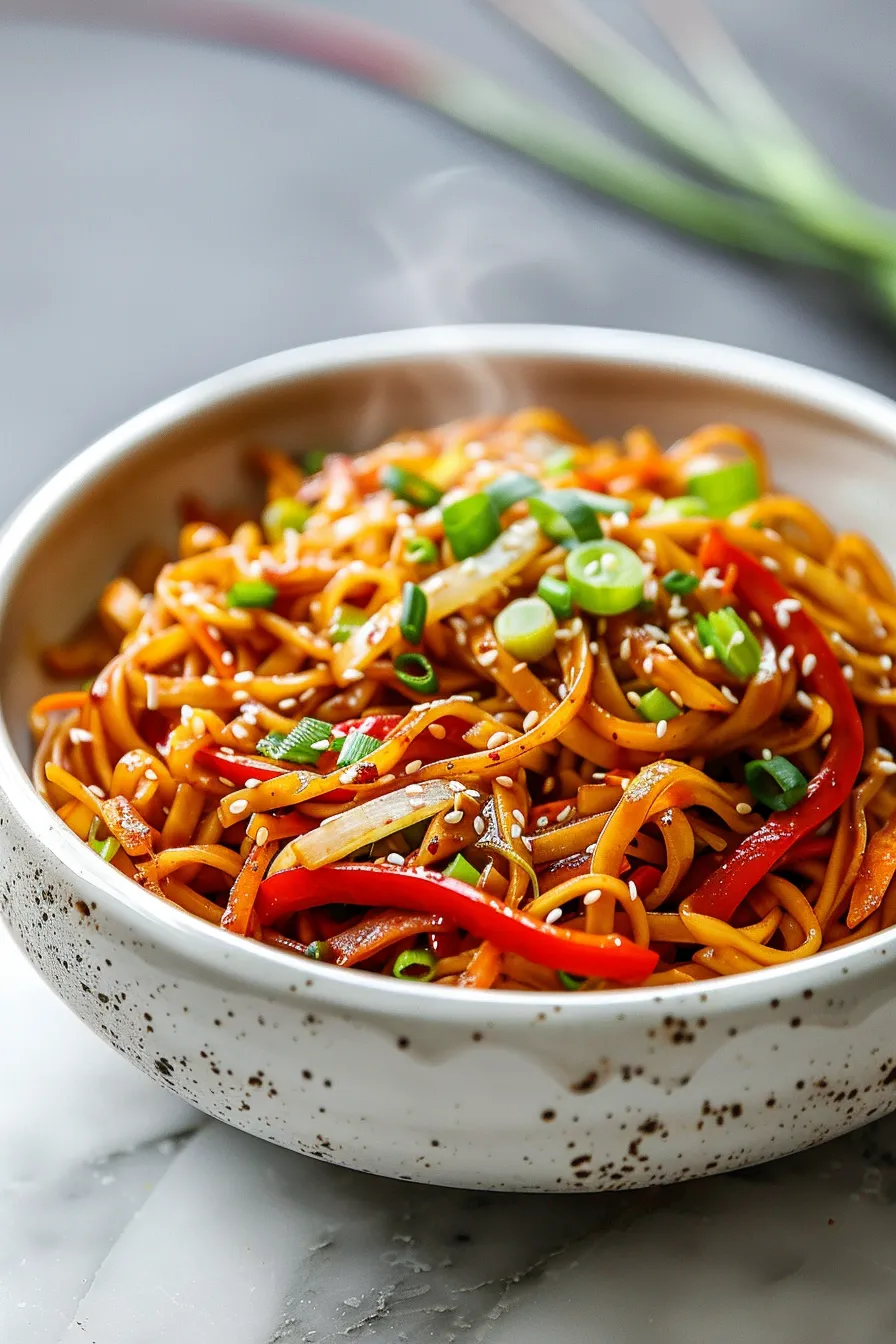
Sweet & Spicy Korean Gochujang Noodles: 20-Minute Meal
Ingredients
Equipment
Method
- Boil noodles per package; drain and rinse.
- Whisk gochujang, hoisin, soy, lime, sesame oil, garlic, and sugar.
- Heat oil in skillet on high.
- Sauté peppers, cabbage, carrots for 1 min.
- Add noodles and sauce; toss to coat.
- Garnish with green onions/sesame seeds.