
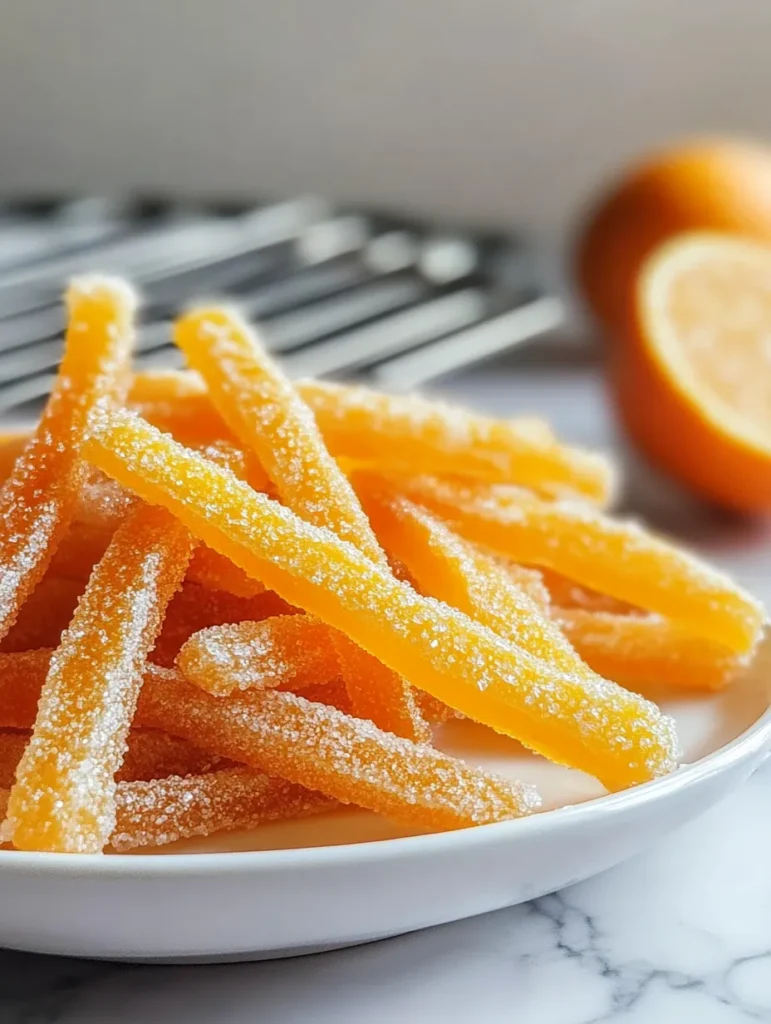
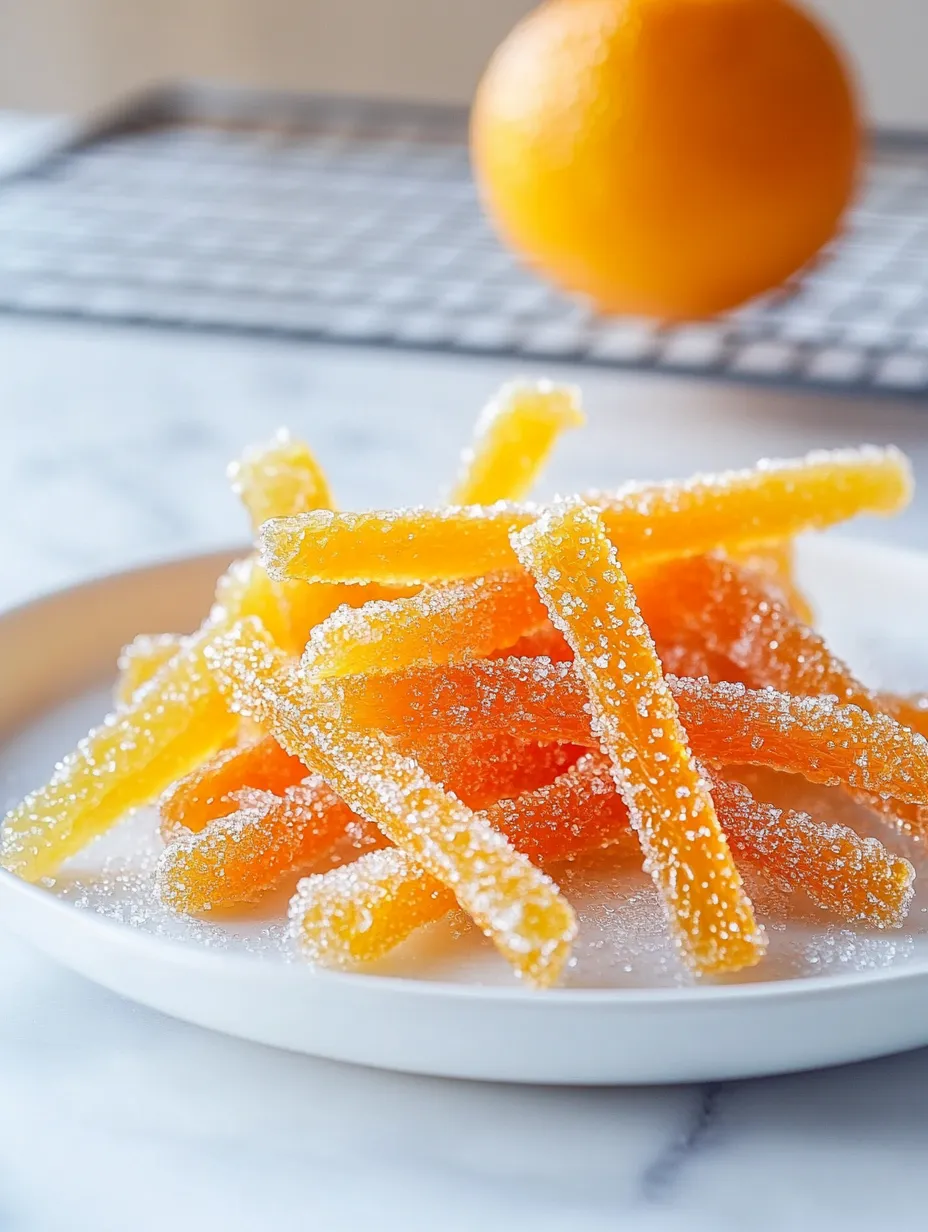
There is something truly magical about transforming humble scraps into a luxurious treat. If you usually toss your orange peels into the compost, stop right there! This foolproof Candied Orange Peel recipe turns bright, zesty citrus rinds into sparkling, sugar-coated gems. They are chewy, sweet, and bursting with concentrated orange flavor—far superior to anything you can buy at the store. Perfect for holiday gifting, garnishing cocktails, or just snacking on when you need a little burst of sunshine.
Why You’ll Love This Recipe
- Zero Waste Magic: It transforms “trash” (peels) into a high-end treasure.
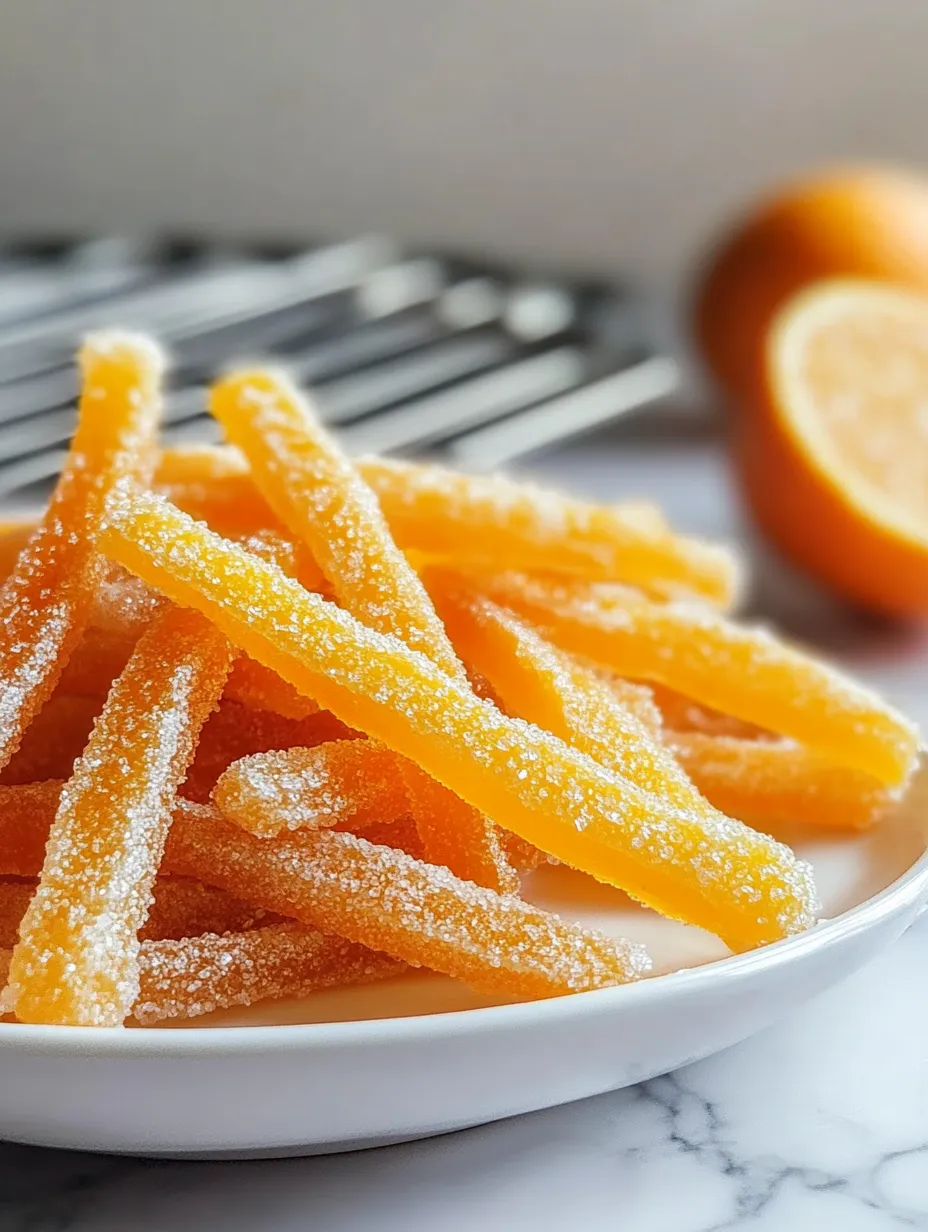
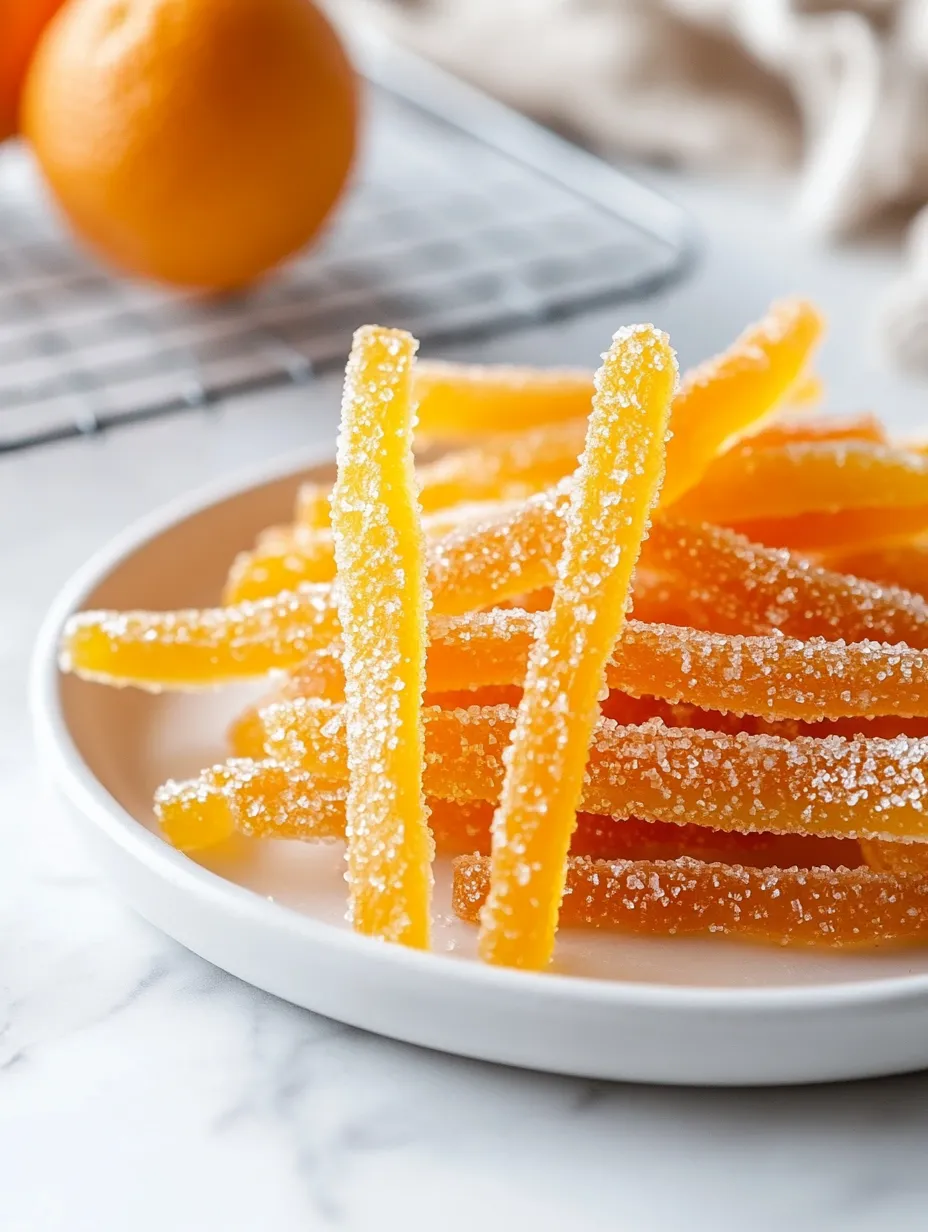
- Texture Perfection: achieves that ideal balance of a crystallized sugar crust with a tender, chewy center.
- Gift-Worthy: These look stunning in a mason jar tied with a ribbon, making for an inexpensive yet thoughtful homemade gift.
- Versatile: Eat them plain, dip them in dark chocolate, or use them to top cakes and cupcakes.
Equipment
- Vegetable Peeler: A Y-peeler works best to get long, even strips without too much pith.
- Medium Saucepot: Deep enough to submerge the peels in the syrup.
- Drying Rack: Essential for letting the peels dry and become tacky before the sugar coating.
- Tongs: To handle the hot, sticky peels safely.
Ingredients
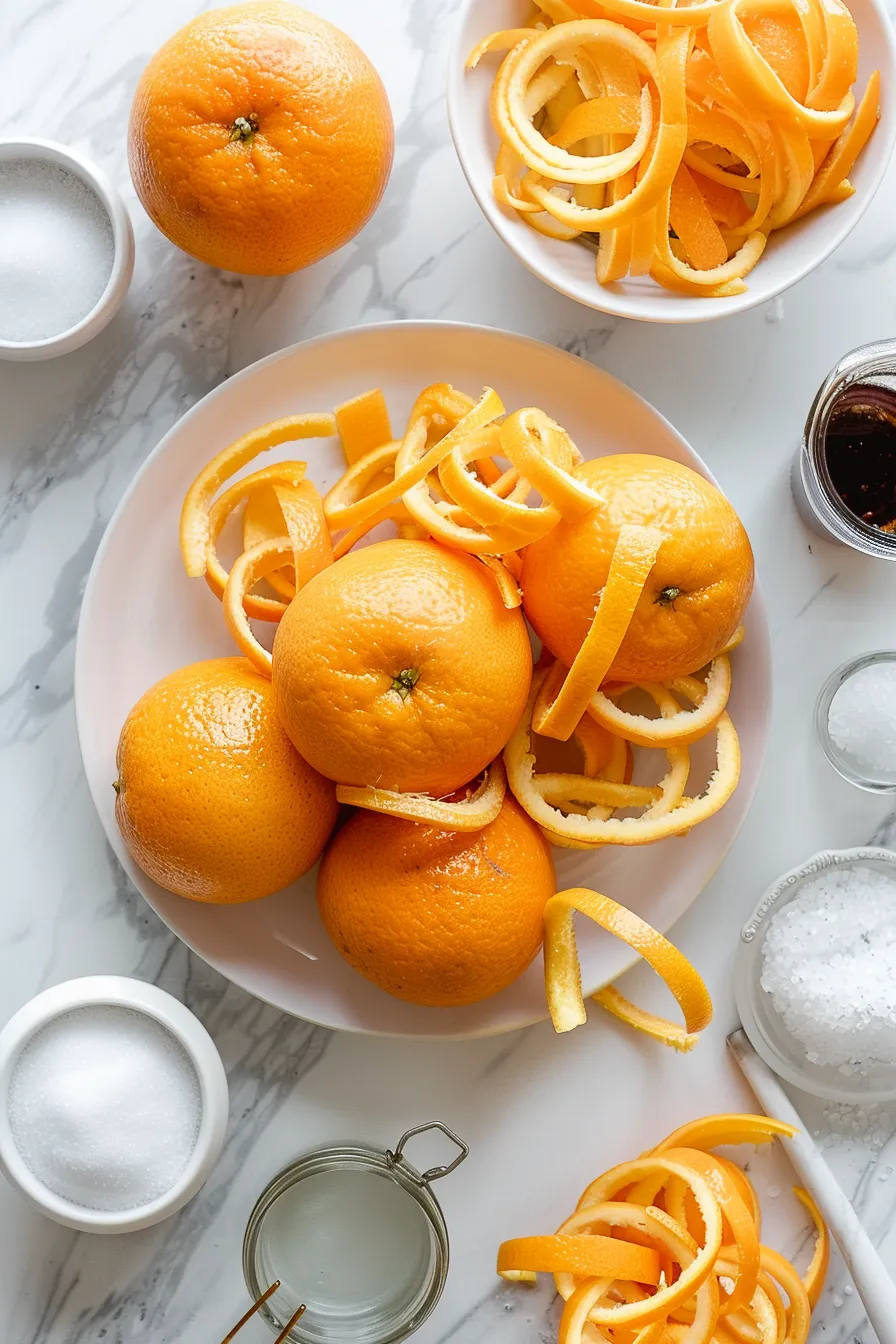
- Large Navel Oranges: 4 large (or 5 small); organic is best since you are eating the skin. You want thick-skinned oranges for the best texture.
- Water: 2 cups; the base for your simple syrup.
- Granulated Sugar: 1 ½ cups (divided); 1 cup is used to candy the peels in the syrup, and the remaining ½ cup creates the sugary coating.
- Vanilla Extract: 1 teaspoon; adds a warm, aromatic depth that complements the citrus oil.
- Salt: ½ teaspoon; a pinch of salt is crucial to cut through the intense sweetness and pop the orange flavor.
Instructions
- Prep the oranges: Trim the tops and bottoms of the oranges. Use a vegetable peeler to peel the oranges from top to bottom into 2-4 inch segments. Press the peeler firmly to get a nice even layer, but be careful to avoid the bitter white pith underneath. Slice these wide strips into ¼ inch thin strips.
- Simmer the syrup: Place the orange peel segments into a medium saucepot over medium to medium-low heat. Add the water, 1 cup of sugar, and the salt. Bring the mixture to a simmer.
- Cook the peels: Once simmering, set a timer for approximately 20 minutes. You want the peels to look soft and translucent but retain their vibrant orange color. Monitor the heat closely; keep it just hot enough to hold a gentle simmer so the sugar doesn’t caramelize or burn.
- Prepare the coating station: Meanwhile, place the remaining ½ cup of sugar in a bowl and set it aside. Set out a drying rack with a piece of wax paper or parchment paper underneath it to catch drips.
- Infuse and rest: After 20 minutes of simmering, stir in the vanilla extract. Turn off the heat and let the peels sit in the hot sugar syrup for another 5–10 minutes to absorb extra flavor.
- Dry and coat: Use tongs to transfer the peels to the cooling rack. Let them rest for at least 15 minutes to become tacky. Toss them in the bowl of reserved sugar to coat thoroughly.
- Final cure: Let the sugared peels dry completely at room temperature on the rack before storing.
You Must Know
- Pith is the Enemy: The white, spongy layer between the fruit and the peel is very bitter. If your peeler takes too much pith, take a moment to carefully scrape it off with a paring knife before cooking.
- Humidity Matters: If it is a very humid day, the peels might take longer to dry. Do not rush the drying process, or your sugar coating will melt into a sticky mess in the storage jar.
Storage Tips
- Refrigerator: Store the completely dried peels in an airtight container in the refrigerator for up to 2 weeks.
- Room Temperature: If your house is cool and dry, they can stay in a sealed jar on the counter for about a week.
- Freezing: These freeze beautifully! Place them in a freezer-safe bag or container for up to 3 months. Thaw at room temperature for a chewy treat.
Ingredient Substitutions
- Citrus Variety: You can use this exact method for grapefruits, lemons, or limes. Lemon peels are fantastic for garnishing espresso or tea.
- Flavorings: Swap the vanilla extract for a drop of almond extract or a cinnamon stick in the simmering liquid for a spiced version.
- Sugar: While granulated sugar is best for the final coating to get that sparkle, you can use cane sugar for the syrup if preferred.
Serving Suggestions
- Chocolate Dipped: Dip half of each strip into melted dark chocolate for an elegant “orangette.”
- Cocktail Garnish: Use a strip to garnish an Old Fashioned or a hot toddy.
- Baking: Chop them up finely and add them to scones, muffins, or fruitcakes.
- Ice Cream: Sprinkle chopped candied peel over vanilla bean ice cream.
Cultural and Historical Context
Candied fruit peel has roots in preservation methods dating back centuries. Before refrigeration, candying fruit in heavy syrup was a primary way to preserve the harvest for the winter months. In many European traditions, specifically in Italy and France, candied citrus is a staple during the Christmas season and a key ingredient in festive breads like Panettone.
Seasonal Adaptations
- Winter: Add star anise and cloves to the simmering syrup for a mulled-spice flavor profile perfect for the holidays.
- Spring/Summer: Use this method with grapefruit or blood oranges for a brighter, more floral variation suitable for warmer weather.
Perfect Occasions
- Holiday Gift Exchanges: Packaged in cellophane bags with a bow.
- After-Dinner Coffee: Served alongside espresso as a petit four.
- Tea Parties: A sophisticated sweet to accompany Earl Grey tea.
Freezer Meal Conversion
While this isn’t a “meal,” you can prep a large batch for the freezer to have garnishes ready year-round. Make the recipe through the drying step, but skip the final sugar toss if you plan to use them for baking later. If you want them for snacking, complete the full recipe, freeze, and eat straight from the freezer for a firmer, taffy-like texture.
Pro Tips
- Use a Y-Peeler: A wide Y-shaped vegetable peeler makes it much easier to get long, even strips of peel compared to a standard swivel peeler.
- Save the Syrup: Do not throw away the orange-infused syrup left in the pot! It is essentially an orange simple syrup. Use it to sweeten iced tea, brush onto sponge cakes, or mix into cocktails.
- Don’t Rush the Drying: If the peels are too wet when you toss them in sugar, the sugar will dissolve. The peels should be tacky (sticky to the touch) but not dripping wet.
FAQs About Recipes
Why is my candied peel bitter?
Bitter peel is almost always caused by leaving too much of the white pith on the skin. Take extra care to peel shallowly or scrape the back of the peel with a knife before boiling.
Can I double this recipe?
Yes, absolutely. Just make sure your pot is large enough so the peels are submerged in the syrup. You may need to slightly increase the simmering time.
Why did my sugar coating melt?
This happens if the peels were not dried long enough before tossing in sugar, or if they were stored in a warm, humid environment. Ensure they are fully cool and tacky before the final sugar toss.
Easy Candied Orange Peel
Ingredients
Equipment
Method
- Trim the tops and bottoms of the oranges. Then use a vegetable peeler to peel the oranges from top to bottom, into 2-4 inch segments.
- Press the peeler firmly against the orange to collect a nice even layer of peel. Be careful to trim off just the peel, not the white bitter pith. Then cut the wide strips into ¼ inch thin strips.
- Place the orange peel segments into a medium saucepot. Set over medium to medium-low heat.
- Add the water, 1 cup of sugar, and the salt. Bring to a simmer.
- Once simmering, set the timer and simmer approximately 20 minutes, or until the peels look soft, but still retain their vibrant color. (Set the stove just hot enough to hold the simmer).
- Meanwhile, place the remaining ½ cup sugar in a bowl and set aside. Set out a drying rack and place a piece of wax paper or parchment paper under it.
- Once the orange peels have simmered 20 minutes, stir in the vanilla extract. Turn off the heat and let the peels rest in the sugar syrup for another 5-10 minutes.
- Use tongs to move the orange peels to the cooling rack. Allow the orange peels to rest at least 15 minutes to dry and cool.
- Toss the peels in the bowl of sugar to coat. Let the peels dry completely at room temperature before storing.